Cuban Bakery Aurora CO: Where Every Pastry Tells a Story
Walk into a good Cuban bakery and the first thing that hits you is rarely the display case. It is the smell. Butter warming in layers of dough. Guava melting into syrup at the edges of a pastry. Espresso pulling dark and fragrant behind the counter. There is usually a low hum in the room too, the sound of regulars ordering quickly because they already know what they want, mixed with the pause of first-time visitors trying to decide between something savory, something sweet, or both.
That is part of the charm of finding a Cuban bakery in Aurora, CO. It is never just about grabbing breakfast and moving on. It is about stepping into a food tradition that has traveled well, adapted carefully, and still holds tight to the details that matter. A flaky pastelito is not a random turnover. A proper croqueta is not just a fried snack. Even the café con leche has a rhythm to it, from the way it is poured to the way it lands on a table beside a warm pastry.
People often search for a Cuban bakery Aurora CO when they want something different from the usual chain bakery case. What they are usually looking for, even if https://collinirax578.timeforchangecounselling.com/delicious-ways-to-enjoy-a-visit-to-a-cuban-bakery-in-aurora-co they do not say it out loud, is food with memory in it. Cuban baked goods have that quality. They are practical enough for a quick breakfast, generous enough for family gatherings, and distinct enough that once you know the flavor profile, you can spot the real thing almost immediately.
More than sugar and dough
One of the biggest misconceptions about Cuban bakeries is that they are simply dessert shops with a Latin accent. Anyone who has spent real time in one knows better. Cuban bakery culture sits at the intersection of pastry, café life, and neighborhood routine. The pastry case matters, but so does the sandwich press, the coffee station, and the front counter where boxes are tied up for birthdays, office meetings, baptisms, and long weekends.
The range tends to be wider than many people expect. Yes, there are sweets, often built around guava, coconut, cream cheese, custard, or dulce de leche. But there are also meat pies, ham croquettes, potato balls, and breads that serve everyday needs rather than special occasions. That balance is part of what makes the format durable. A Cuban bakery is not only for celebrations. It is built for Tuesdays.
In Aurora, that matters. This is a city with a broad food culture and an audience that appreciates places with a strong point of view. People are willing to drive across town for Ethiopian coffee, Korean barbecue, or handmade pupusas. A Cuban bakery fits naturally into that landscape because it offers something specific, rooted, and deeply comforting.
The pastries people remember
If you have never visited a Cuban bakery before, the pastry case can look deceptively simple. Rectangles, rolls, rounds, flaky shells dusted with sugar. Then you take a bite and realize how much technique is hidden in what seems casual.
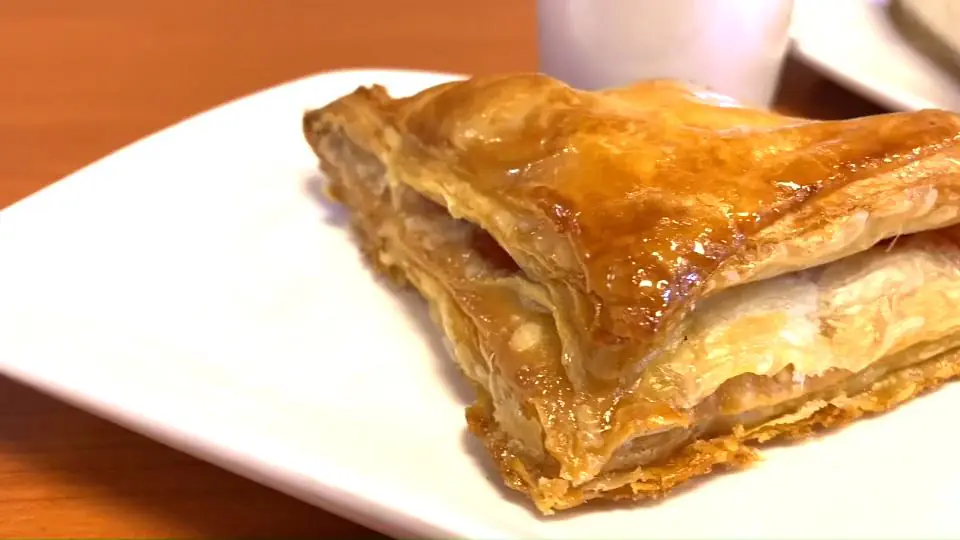
Pastelitos are often the gateway. They can be filled with guava, guava and cheese, coconut, meat, or sweet cream. The best ones have a delicate crunch on the surface and a soft, steaming center. You want clean layers, not a greasy collapse. With guava pastries, the filling should taste bright and fruity rather than flatly sweet. When cream cheese is added, it should soften the fruit, not bury it.
Then there are croquetas, which are bakery staples in many Cuban settings even though they sit closer to the savory snack category. A good ham croqueta has a smooth interior with enough structure to hold its shape, plus a crisp shell that shatters lightly rather than turning tough. This sounds like a small detail, but it is often the difference between something made with care and something rushed for volume.
Cuban bread deserves its own respect. It is airy but not insubstantial, with a thin crust and a light chew that makes it ideal for sandwiches. Bread like this is easy to underrate because it is meant to support fillings, not dominate them. Yet every experienced baker knows that a mediocre loaf will ruin even excellent roast pork or ham.
There is also the matter of cakes, especially for celebrations. Cuban-style cakes often use a lighter sponge and fillings that keep the crumb moist without turning it heavy. Some lean toward tropical flavors, some toward buttery vanilla profiles, and many reflect family preferences more than strict rules. That flexibility is part of the living tradition.
Why Cuban bakery culture travels so well
Some food traditions lose their center when they move. Cuban bakery culture rarely does. The products are portable, the recipes are adaptable to local markets, and the emotional structure around them remains strong. Breakfast pastries still matter. Coffee still matters. A cake for a special event still matters.
That portability is one reason Cuban bakeries tend to become gathering spots wherever they take root. They appeal to customers who grew up with these foods and to newcomers who recognize quality the moment they taste it. A person may come in curious about a guava pastry and return because the coffee is right, the savory case is strong, and the staff remembers their order after the third visit.
In a place like Aurora, where communities overlap and influence each other constantly, that kind of establishment often becomes more than a bakery. It becomes a small anchor. Not flashy, not overexplained, just reliable in the way neighborhood food institutions need to be.
What sets a great Cuban bakery apart
There is a noticeable difference between a bakery that sells Cuban items and a bakery that lives the tradition. You can often tell within five minutes.
The strongest places usually get the basics right first. The pastry shell tastes fresh, not tired. The fillings are balanced. Coffee is treated as essential, not secondary. Savory items move fast because people trust them. Staff can answer simple questions without sounding like they are reading from a menu board.
Temperature also tells a story. Certain pastries should be warm or at least taste recently baked. Fried items should hold their crispness. Bread should feel alive in the hand. A stale pastry case is hard to hide, no matter how attractive the arrangement is.
Another marker is restraint. Cuban bakery flavors are often vivid, but the best versions are not clumsy. Guava should still taste like fruit. Sugar should support texture and aroma, not flatten them. Cheese should bring salt and richness in the right proportion. This is especially important for customers who assume Latin pastries will always be overly sweet. Many are surprised to find a more nuanced balance than they expected.
The coffee matters as much as the pastry
If the pastry case is the visual centerpiece, the coffee is the pulse. Cuban coffee culture is direct, social, and unapologetically strong. A tiny cup can carry more character than a much larger drink elsewhere. Café cubano, cortadito, and café con leche each have their own place, and each pairs differently with what comes out of the kitchen.
A sweet pastry and a sharp espresso create contrast. A café con leche beside a savory pastry softens the salt and fat in a satisfying way. A cortadito with a croqueta turns a quick stop into a proper midmorning break. These combinations matter because Cuban bakery culture was never designed around isolated menu items. It is a system of pairings.
For newcomers, ordering can feel fast. Regulars often know exactly what they want, and the line may move at a brisk pace. That should not be intimidating. In most places, a simple question at the counter will get you where you need to go. Ask what came out fresh, what regulars order in the morning, or what pairs well with café con leche. Good staff usually enjoy guiding first-timers toward something classic.
A bakery counter full of history
Every pastry tradition carries migration inside it. Cuban baking reflects Spanish influence, Caribbean ingredients, local ingenuity, and the practical demands of feeding families well and often. Guava pastries are one clear example. Guava is not there by accident. It brings tropical brightness, preserves well, and delivers a flavor that instantly signals a broader cultural landscape.
The same goes for the use of puff pastry, custards, syrups, and croquettes. These are foods with deep roots, but they are also foods shaped by adaptation. That is why Cuban bakeries tend to feel both familiar and specific. There is comfort in them, but there is also a distinct vocabulary of taste.
When these foods are made in Colorado, another layer gets added. Local customers bring their own expectations. Ingredients may vary slightly. The pace of service may reflect the surrounding neighborhood. Some bakeries lean more heavily into traditional offerings, while others make room for crossover items that speak to the area they serve. Neither approach is automatically better. The real question is whether the bakery has a point of view and executes it consistently.
What to order on a first visit
If you are trying a Cuban bakery in Aurora, CO for the first time, it helps to think in pairs rather than single items. Choose one sweet, one savory, and one coffee. That gives you a clearer sense of the bakery’s range and standards.
A strong first order often includes the following:
- A guava or guava and cheese pastelito
- A ham croqueta or another savory staple
- A café con leche or cortadito
That combination tells you a lot. The pastry reveals how well the bakery handles lamination, sweetness, and filling balance. The croqueta shows whether the savory side gets equal care. The coffee tells you whether the place understands that bakery culture and coffee culture are inseparable here.
If you are buying for a group, add Cuban bread or a few mixed pastries and watch what disappears first. In my experience, guava and cheese goes quickly, savory items vanish even faster than people expect, and someone always circles back for coffee.
The role of texture, often overlooked
Flavor gets most of the attention, but texture is where good bakeries separate themselves. Cuban pastries are texture-driven food. Flake, crunch, softness, creaminess, and chew all need to show up in the right proportions.
Take a pastelito. If it is too thick, the filling gets lost. If it is underbaked, the layers merge into something doughy. If the sugar glaze is too heavy, the exterior loses delicacy. When it works, you get a crisp top, a tender inner structure, and a filling that stays contained until the bite opens it.
The same principle applies to savory items. A croqueta should not feel dense like cold mashed filling wrapped in crumbs. Potato balls should not turn gummy. Bread should not taste cottony. These sound like technical quibbles, but they define the eating experience. Great bakeries obsess over these details because customers may not describe them in technical terms, yet they always notice the difference.
Why neighborhood bakeries still matter
For all the convenience of supermarket pastry cases and delivery apps, neighborhood bakeries still do something the larger system cannot. They create ritual. A regular morning coffee. A box picked up on the way to work. A birthday cake discussed with an actual person instead of selected from a screen. A child pointing at a pastry through the glass and learning, maybe for the first time, that food can carry family history.
That matters in a city like Aurora, where so much of the food scene is driven by community knowledge rather than heavy marketing. People tell each other where to go because the food is worth talking about. A Cuban bakery that earns loyalty does so one pastry at a time, one conversation at a time, one box brought home to the family at a time.
It also matters because bakeries teach taste without making a big speech about it. You learn that guava pairs naturally with cheese. You learn that strong coffee and sweet pastry can sharpen each other rather than clash. You learn that a savory snack can sit comfortably next to a sweet one in the same visit. These are small lessons, but they expand a person’s food vocabulary in lasting ways.
Visiting with the right expectations
A Cuban bakery is not always polished in the way chain cafés are polished. The menu may be broad. The case may change by the hour. The pace may be brisk. Some items may sell out. That is not a flaw. In fact, it is often a sign that the bakery is operating like a real bakery, with batches moving, regulars showing up early, and fresh products disappearing as they should.
A few habits will improve the visit:
- Go earlier in the day if you want the fullest pastry selection.
- Ask what is fresh if you are undecided.
- Order coffee with the pastry instead of as an afterthought.
- If you find something you love, buy extra, because favorites do sell out.
That advice is simple, but practical. The people who get the most out of bakeries tend to approach them as living spaces rather than static menus.
Aurora’s place in the story
Aurora is the kind of city where culinary traditions from many places can coexist without flattening each other. That creates a favorable setting for a Cuban bakery. Customers are often adventurous enough to try unfamiliar items, but they also recognize craftsmanship when they taste it. A bakery does not have to explain every item if the food is good and the hospitality is steady.
Searching for a Cuban bakery Aurora CO is, in a sense, searching for a local experience shaped by a larger history. You are looking for Colorado hospitality filtered through Cuban flavor and baking tradition. Done well, that combination feels natural, not forced. It respects the roots while responding to the neighborhood in front of it.
That is where these bakeries become memorable. Not because they imitate some frozen idea of authenticity, but because they understand the deeper point. The pastry is supposed to nourish, delight, and connect. The coffee is supposed to sharpen the morning or slow down the afternoon. The room is supposed to feel useful to daily life.
Every pastry carries a point of view
People sometimes talk about pastries as indulgences, as if they exist outside ordinary life. Cuban bakeries suggest something more grounded. A pastry can be pleasure, yes, but it can also be continuity. It can remind someone of family, introduce someone else to a new flavor, or mark a small pause in the middle of a crowded day.
That is why the best Cuban bakery experiences stay with people. The food is delicious, but the deeper appeal is that nothing feels anonymous. Someone folded that dough with care. Someone chose that guava filling because it tastes right, not because it photographs well. Someone brewed that coffee strong because that is how it should be served.
When you find a Cuban bakery in Aurora, CO that understands those basics, you feel it immediately. The space has confidence. The food has character. The pastries do not just fill the case. They say something about where they come from, who made them, and why these traditions continue to matter.
And that, more than novelty or trend, is what keeps people coming back. Every good bakery has signature items. The memorable ones also have soul. In a Cuban bakery, you taste that soul in the first crackle of pastry, the first sip of coffee, the first bite that turns a quick errand into a story worth repeating.
Cuba Bakery & Café
15028 E Mississippi Ave, Aurora, CO 80012
+1 303-752-2822
FAQ About Cuban bakery Aurora CO
What are Cuban pastries called?
Many small Cuban pastries are called pastelitos. They can have sweet or savory fillings, such as guava, cheese, guava and cheese, or seasoned meat. Cuba Bakery & Café lists guava, cheese, guava-and-cheese and beef pastries on its menu. Ask the bakery about current availability and ingredients when ordering.
What are traditional Cuban pastries?
Common Cuban bakery choices include flaky pastelitos filled with guava, cheese or meat. Cuban bakeries may also offer empanadas, breads and desserts alongside coffee. Cuba Bakery & Café lists pastelitos, several empanada fillings, pan Cubano and desserts such as tres leches and bread pudding. Selection can vary, so confirm the day's choices with the bakery.
What makes Cuban bread different?
Cuban bread is known for its light interior and a thin crust that becomes crisp when toasted or pressed. Traditional recipes often use lard, although ingredients vary by baker. It is commonly served as buttered toast or used for Cuban sandwiches. Cuba Bakery & Café lists pan Cubano and tostada on its menu; ask staff about the ingredients in their bread if you have dietary restrictions.
Ends · EDGARQHUJ615