Jamaican Food and the Stories Behind Every Bite
Jamaican food rarely arrives as just food. It comes with smoke in the air, a memory of a market stall, a grandmother guarding a pot, a fisherman talking about the morning catch, a Sunday gathering that lasted longer than planned. Even the dishes that seem straightforward at first glance carry layers of movement, survival, ingenuity, and pride. To eat in Jamaica, or to eat Jamaican food made well anywhere else, is to taste history that never really became past tense.
People often talk about Jamaican cuisine through its boldness. They mean the heat of Scotch bonnet pepper, the deep savor of slow-cooked meat, the sweetness that slips into savory dishes, the unmistakable perfume of pimento wood smoke. All of that is true. But boldness is only part of the story. The deeper truth is that Jamaican food is a record of encounters, some joyful, many painful, all transformative. Indigenous ingredients, African cooking knowledge, European colonial systems, Indian spices, Chinese techniques, Middle Eastern trade routes, and local improvisation all meet on the plate.
That is why the cuisine resists simplification. The person looking for a quick list of “top Jamaican dishes” misses what makes the food memorable. A patty is never just a patty. A bowl of mannish water says something about celebration and masculinity and rural tradition. A spoonful of callaloo can speak to thrift, nutrition, and the practical brilliance of making the most of what grows well. Rice and peas on a Sunday plate tells you something about routine, faith, family structure, and the rhythm of the week.
A cuisine shaped by land and pressure
Jamaica’s landscape is generous, but not passive. Mountains, coasts, fertile plains, and tropical weather all shaped what people could grow, preserve, trade, and cook. Yams, cassava, plantains, coconuts, breadfruit, and a remarkable variety of fish and shellfish became staples not because they were fashionable, but because they were available, practical, and sustaining.
The island’s history also imposed difficult conditions. Enslaved Africans, later indentured laborers from India and elsewhere, and poor rural communities had to cook under constraint. That pressure often creates a cuisine of startling intelligence. Less tender cuts become glorious after slow braising. Salt fish, originally valued because it could survive long transport, becomes central rather than secondary. Ground provisions such as yam, green banana, and coco turn from necessity into comfort. Seasoning becomes both art and argument, a way of claiming pleasure even when circumstances offered little of it.
That pattern repeats across Jamaican food. Scarcity and abundance sit side by side. The island can produce extraordinary fruit and seafood, yet many signature dishes come from methods built around preservation, stretching ingredients, and feeding many mouths. If you spend time around cooks who know these traditions well, you hear a lot about judgment. Not recipes in the rigid sense, but judgment. How much thyme is enough. When the pot should be left alone. How dark the browning should go before it turns bitter. Which fish can stand up to escovitch sauce and which will collapse under it.
Jerk is more than a flavor
Outside Jamaica, jerk often gets flattened into a seasoning blend or a menu label. In Jamaica, it is a method, a place, and a cultural inheritance. The roots of jerk cooking are usually traced to the https://www.google.com/maps?cid=11425353456438405488 Maroons, descendants of Africans who escaped enslavement and built communities in Jamaica’s interior. Their techniques drew on African knowledge, local ingredients, and the practical need to preserve and cook meat in ways that were discreet and efficient.
Traditional jerk is not simply “spicy grilled meat.” It depends on seasoning the meat deeply, often with allspice, Scotch bonnet, thyme, scallion, ginger, garlic, and other aromatics, then cooking it slowly over pimento wood. That wood matters. It gives off a fragrance that no bottled marinade can fully imitate. If you have stood near a real jerk pan, you know the smell reaches you before the food does. It is sweet, smoky, resinous, and unmistakably Jamaican.
Jerk pork is often the benchmark because pork takes to the treatment beautifully. The fat bastes the meat as it cooks, the char balances the spice, and the smoke settles into every crevice. Jerk chicken, now more globally common, can be excellent too, though it is less forgiving. A chicken left on too long dries out quickly, and too many places compensate by drowning it in sauce afterward. Good jerk does not need rescue. It should be moist inside, marked by smoke rather than dominated by it, and hot enough to wake the palate without numbing it.
The stories around jerk are as important as the technique. Roadside jerk centers are social spaces. People wait, talk, negotiate portions, and argue over who does it best. One cook swears by a wetter marinade, another keeps it almost dry. One uses more pimento, another lets the Scotch bonnet lead. Those differences are not mistakes. They are local style, family habit, and personal pride expressed through food.
Ackee and saltfish, national dish and national conversation
Few dishes capture Jamaica’s layered identity better than ackee and saltfish. Ackee, originally from West Africa, was brought to the Caribbean during the colonial period. Saltfish, usually cod preserved in salt, came through Atlantic trade networks and became a practical staple. Together, they form something that feels entirely Jamaican.
Prepared properly, ackee has a delicate, buttery texture and a mild flavor that invites seasoning without disappearing beneath it. It is often sautéed with saltfish, onion, tomato, scallion, thyme, and Scotch bonnet. When the balance is right, the dish is subtle rather than loud. That surprises people expecting fireworks. Ackee and saltfish is not about brute force. It is about interplay, salt and softness, brightness and richness, structure and tenderness.
It also carries a note of caution and respect. Ackee must be handled correctly. The fruit has to open naturally before it is safe to eat, and experienced cooks know not to rush that process. In many Jamaican kitchens, that knowledge is passed quietly, almost casually, as if everyone should understand that some foods require patience and attention. Those habits of care are part of the cuisine too.
Served with fried dumplings, roasted breadfruit, boiled green bananas, or yam, ackee and saltfish becomes more than a breakfast. It becomes a statement about what the island chose to make its own. Imported preserved fish meets an African fruit and local starches, then turns into a national emblem. That is Jamaican food in one plate: adaptation without apology.
The logic of the Sunday table
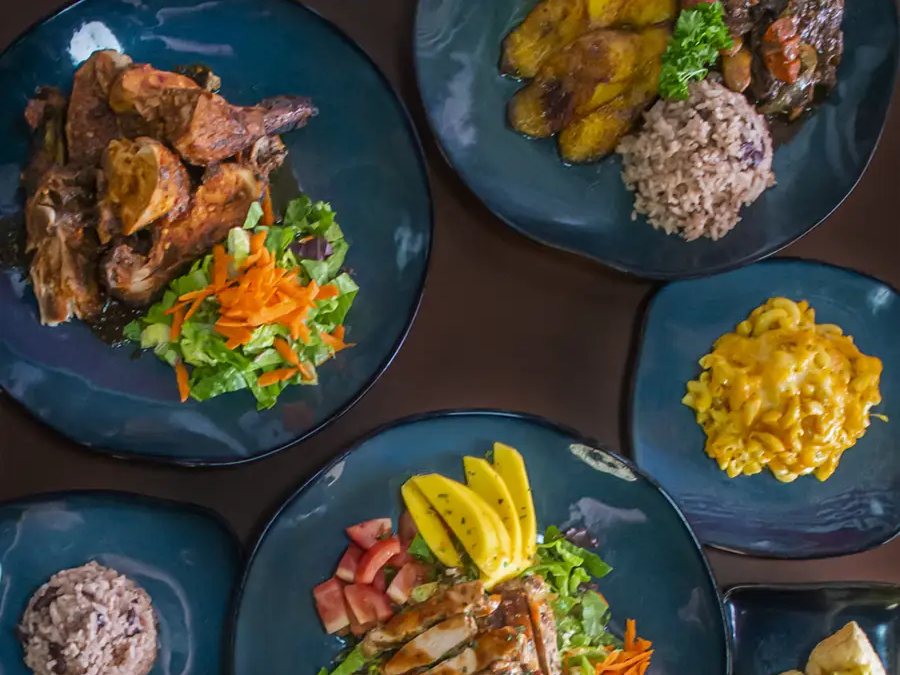
If you want to understand a cuisine, look at what people make when family comes over. In Jamaica, Sunday dinner has long held that role. The exact menu varies by household and region, but the structure often feels familiar: rice and peas, a central meat dish, vegetables, salad, maybe macaroni and cheese, perhaps plantain, and enough food for someone to take home.
Rice and peas is one of those dishes outsiders often misunderstand. In Jamaica, “peas” usually means beans, frequently kidney beans or gungo peas depending on the season and the cook’s preference. The rice is cooked with coconut milk, thyme, scallion, and sometimes a whole Scotch bonnet for fragrance rather than direct heat. It should not be sweet, and it should not be mushy. Done properly, the grains remain separate while carrying the flavor of everything they absorbed in the pot.
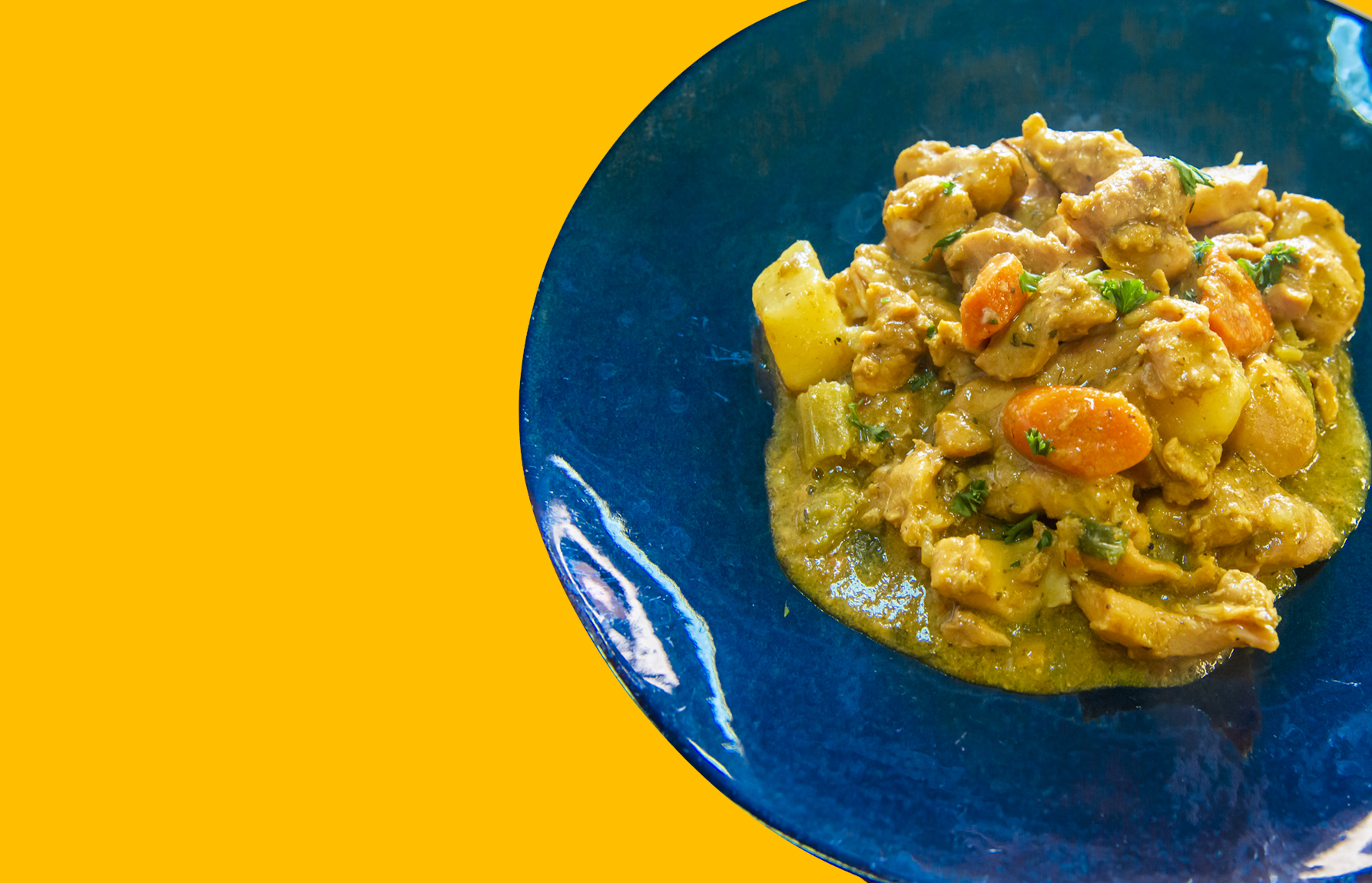
Sunday meats tell their own stories. Brown stew chicken is a masterclass in controlled caramelization. The chicken is seasoned, browned, then simmered with onions, peppers, tomato, and herbs until the sauce deepens into something rich but not heavy. Curry goat, a celebratory favorite, points to Indian influence filtered through Jamaican taste. The curry powder used in Jamaica has its own personality, and the dish often leans fragrant and assertive rather than delicate. Oxtail, once dismissed as a lesser cut, has become a prized dish in many households and restaurants. Its popularity says a lot about how cuisines built under pressure learn to transform humble ingredients into luxuries.
These meals are not only about appetite. They are rehearsals of belonging. Children learn what “done” looks like by watching adults lift lids and taste gravies. Arguments about whose rice and peas is better are really arguments about memory and allegiance. Food becomes a way of measuring continuity.
Patties, portability, and working life
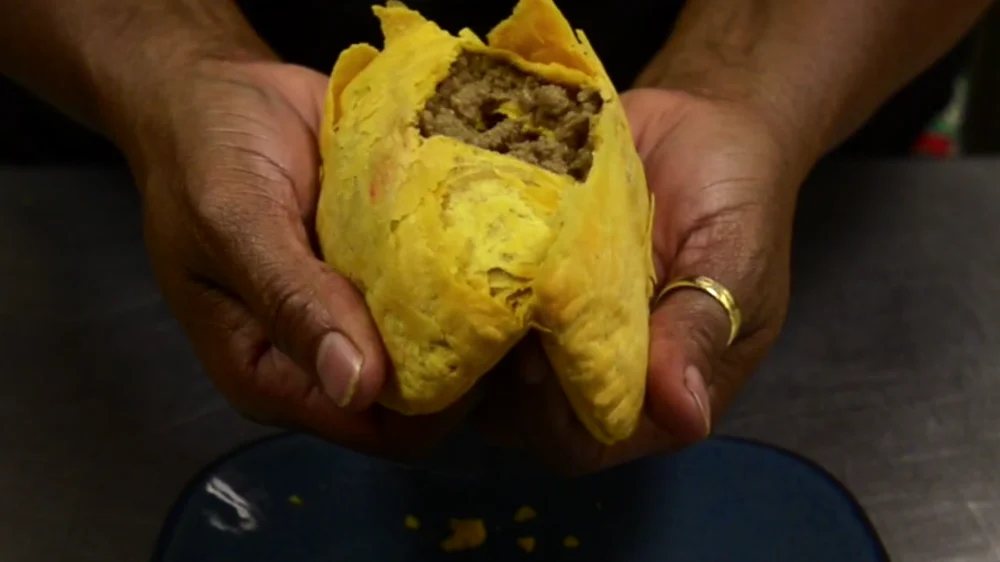
No serious discussion of Jamaican food can skip the patty. It may be the island’s most democratic dish, available in bakeries, school canteens, roadside shops, gas stations, and upscale versions that sometimes miss the point entirely. At its best, a Jamaican patty is practical food with real character: a flaky turmeric-stained crust wrapped around a filling that is well seasoned, moist, and distinct.
The classic filling is beef, often spiced with Scotch bonnet, black pepper, thyme, and scallion. But chicken, vegetable, shrimp, soy-based fillings, and saltfish versions all have their place. The real measure is not novelty. It is whether the pastry shatters lightly without becoming dry, and whether the filling tastes alive rather than generic.
The patty’s story is often linked to the broader family of filled pastries that traveled through colonial and migrant routes, including the Cornish pasty and South Asian samosa. Jamaica turned those influences into something unmistakably its own. The crust gained color and tenderness. The seasoning profile sharpened. The result suited school lunches, work breaks, bus rides, and late-night hunger.
There is also the particular pleasure of a patty tucked into coco bread, a soft slightly sweet bread that cushions the heat and catches every leak. It is not elegant, and it does not need to be. It is one of those combinations that makes perfect sense once you have eaten it in motion, standing up, on the way somewhere.
Sea, vinegar, and the sharp pleasures of escovitch
Island cooking always reveals itself clearly in fish dishes, and Jamaica has many. Escovitch fish remains one of the most vivid. A whole fish, often snapper, is fried until the skin turns crisp, then dressed with a bright, pickled mixture of onion, carrot, Scotch bonnet, and vinegar. The contrast is the point. Hot fish, sharp dressing, crunchy vegetables, soft flesh underneath.
The roots of escovitch likely connect to Spanish escabeche, but the Jamaican version is no museum piece. It is fully naturalized, sharpened by local pepper and shaped by local preference. It also reflects a broader Jamaican instinct for balancing richness with acid, and heat with freshness. A lot of people who think Jamaican food is always heavy change their minds when they eat good escovitch.
On the coast, the seafood repertoire widens. Pepper shrimp sold in paper bags, curried lobster when in season, rundown made with mackerel or other fish simmered in coconut milk until the sauce nearly breaks, each dish reflects both ecology and economy. What lives in the water influences what appears in the pot, but preservation, market access, and tourism also matter. Some coastal dishes remain highly local because they depend on timing, freshness, and regional habit in a way export-friendly foods do not.
Ital cooking and the discipline of simplicity
One of the most misunderstood parts of Jamaican cuisine is Ital food, associated with Rastafarian dietary practice. People who reduce it to “vegan Jamaican food” miss its philosophical core. Ital eating is tied to ideas of natural living, purity, and vitality. Depending on the cook and the community, it may exclude meat, salt, processed ingredients, and sometimes even certain vegetables or canned goods.
What matters in practice is that good Ital cooking demands skill. When you remove shortcuts, flavor has to come from careful layering of herbs, coconut milk, fresh produce, and texture. A pot of Ital stew can be deeply satisfying without shouting. Pumpkin, callaloo, lentils, okra, cho cho, and ground provisions all have space to speak.
I have eaten bland versions of Ital food outside Jamaica that mistake restraint for virtue. On the island, the best cooks do not make that error. Their food is clean, yes, but also confident. It proves that Jamaican flavor does not depend solely on meat or overwhelming heat. It can come from coconut richness, thyme, scallion, ginger, and the sweetness of vegetables cooked exactly long enough.
Street food, sweets, and the everyday appetite
A cuisine lives or dies in its ordinary moments. Jamaica’s roadside and small-shop foods reveal as much about national taste as any famous dish. Roasted corn brushed with butter, bag juice in bright frozen sleeves, peanut porridge in the morning, soup on a Saturday, fried sprat, festival beside fish, sugar cane chewed for pleasure, these are the textures of daily life.
Jamaican soups deserve more respect than they often get abroad. Saturday soup is not a casual side. It can be the event itself. Red peas soup with beef or pig’s tail, chicken foot soup, pumpkin soup, mannish water after a celebration, each one carries body, nourishment, and a kind of collective understanding about what a proper soup should do. It should sustain, fortify, and stretch. It should feel like it was made with intent.
The sweet side of Jamaican food tells stories too. Gizzada with its spiced coconut filling, grater cake, toto, rum cake, and banana bread all reflect the island’s ease with coconut, spice, ripe fruit, and dark sugar. These are not shy desserts. Even the simpler ones tend to taste like the climate they came from.
Here are a few signs that a Jamaican dish has likely been made with care:
- The seasoning tastes absorbed, not painted on at the end.
- Heat supports the dish rather than overwhelming it.
- Texture has been considered, whether that means flaky pastry, tender goat, or crisp fish skin.
- Aromatics such as thyme, scallion, ginger, and pimento remain identifiable.
- The food feels balanced between comfort and intensity.
That balance is harder to achieve than many people think. Plenty of restaurants can make food spicy. Fewer can make it distinctly Jamaican.
Migration changed the table, but not the core
Jamaican food traveled with migrants to the United Kingdom, the United States, Canada, and beyond. In each place, it adapted to ingredient availability, weather, neighborhood economics, and customer demand. Goat got expensive. Certain fish became hard to source. Scotch bonnet had to compete with other peppers. Some cooks leaned sweeter, some toned down the heat, some enlarged portions, and some elevated plating to fit fine-dining expectations.
These changes are not necessarily betrayals. Migration cuisines always improvise. The deeper question is what survives the move. Usually it is the seasoning logic, the memory of how long a dish should take, the insistence on a proper gravy, the refusal to serve rice and peas that tastes flat. Diaspora cooks often become fierce custodians because they know what gets lost first when a cuisine is commercialized.
At the same time, Jamaican food abroad has influenced how the wider public imagines the island. Jerk chicken and patties became ambassadors, but they also became stereotypes. The challenge for serious cooks and writers is to widen that picture without becoming precious about authenticity. Authenticity is useful up to a point. Beyond that, context matters more. Who is cooking? For whom? With what ingredients? Under what constraints? Those questions tell you more than a rigid checklist ever could.
Why seasoning in Jamaican kitchens feels different
One of the most instructive things to watch in a Jamaican kitchen is the treatment of seasoning. It is not just a matter of flavoring the surface of food. Seasoning is often thought of as entering the ingredient, giving it character before it reaches the pot or pan. Green seasoning blends vary, but they commonly include scallion, thyme, garlic, onion, ginger, and pepper. Browning, whether homemade from burnt sugar or commercial, gives color and a slight bitter edge when used well.
Marination time matters, but so does sequencing. Some cooks season meat overnight. Others do it earlier the same day and rely on technique to carry the rest. Some add fresh thyme late to brighten a dish already cooked with dried herbs. Some crush pimento berries directly into the pot. There is no single canonical method. What there is, consistently, is a seriousness about depth.
A useful way to understand Jamaican food is to think in layers rather than labels. The food is often spicy, yes, but spice is only one layer. Smoke, sweetness, bitterness, acid, herbaceousness, fat, starch, and salt all have roles. When one note dominates too much, the dish feels less true to itself.
Every bite has a voice behind it
The lasting power of Jamaican food comes from the fact that it keeps people audible. You taste the Maroon cook in the jerk pit, the market vendor trimming callaloo, the fisherman choosing the day’s fish, the baker sealing patties before dawn, the grandmother who never wrote down her curry goat method because she expected you to watch. Even when recipes travel online and restaurant versions multiply, the food still carries those voices.
That is why the best Jamaican meals often feel personal, even in public spaces. They are anchored in technique, but they are also anchored in memory and judgment. A spoonful of soup can remind someone of a Saturday in the countryside. A piece of roast breadfruit can call up hurricane season preparations. A patty can take a migrant back to a school break or a bus stop. Food this rooted rarely stays on the plate. It reaches outward into language, music, religion, labor, and family life.
To understand Jamaican food, start with appetite, but do not stop there. Ask what had to happen for this dish to exist. Ask who preserved the method. Ask why this ingredient matters on this island and not in the same way elsewhere. The answers are never abstract. They are present in the bite itself, in the smoke, the pepper, the starch, the sweetness, the patience. Jamaican food tells stories because it was built by people who had no choice but to make meaning from what they had, and then make it taste unforgettable.
Reggae Pot Jamaican Grill
2243 S Monaco St Pkwy #104
Denver, CO 80222
+1 720-410-2956
FAQ About jamaican food
What is the best Jamaican food to try in Denver?
The best choice depends on your tastes. Popular options include jerk chicken, curry goat, slow-cooked oxtail, and savory patties. Reggae Pot lists these dishes on its menu, with sides such as rice and peas and plantains. Ask the Denver team about current availability and spice levels.
Is Jamaican food very spicy in Denver?
Heat varies by dish and preparation. Jerk seasoning often includes scotch bonnet peppers alongside herbs and allspice, while other dishes may have gentler seasoning. Ask about the heat of the specific dish and any sauce before ordering.
What are some popular Jamaican snacks?
Jamaican patties are a popular snack made with flaky pastry and savory meat or vegetable fillings. Other options include fried dumplings and festival, a sweet fried dough often served with savory dishes. Availability varies, so check the current menu when ordering.
Ends · EDGARQHUJ615